
Even if you brush twice a day, floss, and maintain your oral hygiene by routinely replacing your toothbrush, you may feel that something is missing in your oral care routine. Oil pulling and the ancient wisdom of Ayurvedic oral care could be just what you are missing.
What Is Ayurveda?
Ayurveda is one of the world's oldest holistic health systems, originating in India over 5,000 years ago. The word comes from Sanskrit: ayur (life) and veda (knowledge). At its core, Ayurveda teaches that health isn't just the absence of disease—it's a state of balance between the mind, body, and environment. That philosophy extends from the mouth to the digestive system and beyond.
In Ayurveda, oral health is considered a window into your overall wellbeing. An unhealthy mouth isn't just a dental problem—it's a signal that something deeper may be out of balance. That's why Ayurvedic oral care goes far beyond cavity prevention. It's about daily rituals that cleanse, strengthen, and restore your body from the inside out.
The Foundations of Ayurvedic Oral Care
Oil Pulling
Oil pulling—known in Ayurveda as Kavala or Gandusha—is one of the most well-known Ayurvedic practices in the Western world, and for good reason. The practice involves swishing a tablespoon of oil, traditionally sesame or coconut, around your mouth for several minutes, then spitting it out.
The concept is simple. As the oil moves through your mouth, it binds to bacteria, toxins, and debris, pulling them away from your teeth and gums. Incorporating oil pulling can significantly improve oral health. People who practice oil pulling report fresher breath, cleaner teeth, and healthier gums with consistent use.
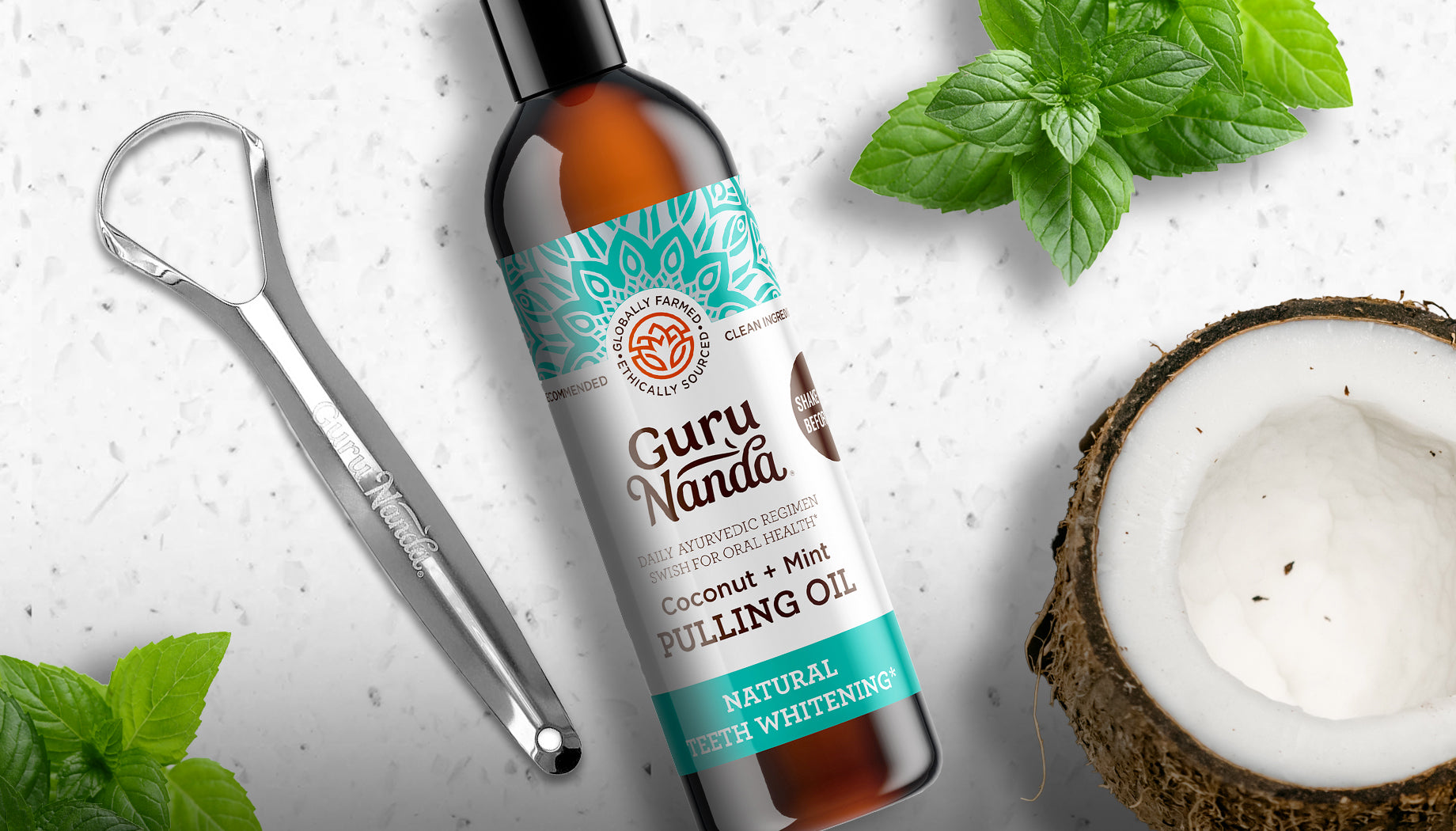
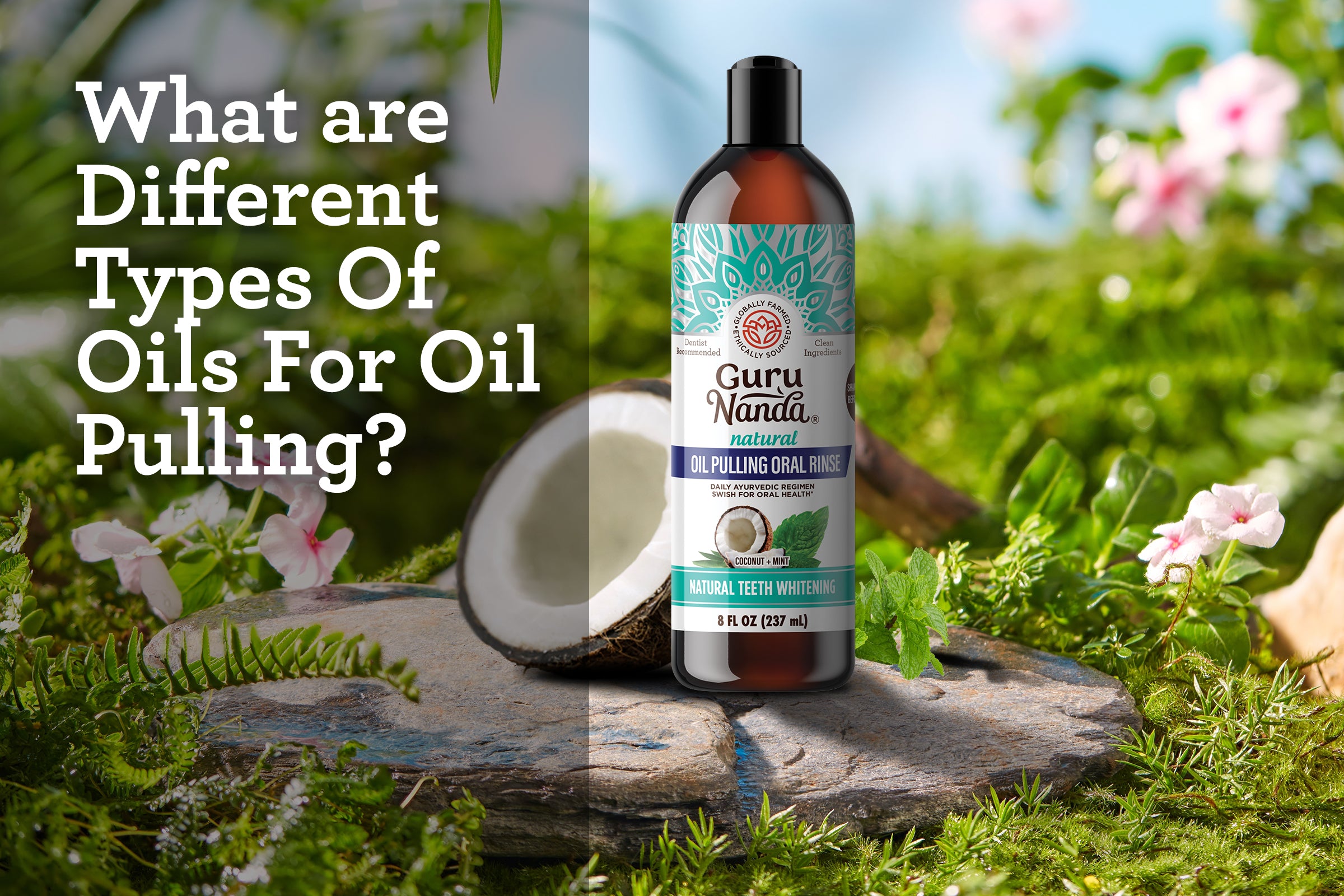
GuruNanda's oil pulling blends take this ancient ritual a step further by combining fractionated coconut oil with time-honored Ayurvedic ingredients like clove, oregano, peppermint, and tea tree oil—each chosen for their natural cleansing properties.
Neem
In Ayurveda, the neem tree is often called the "village pharmacy." For centuries, people across South Asia have used neem twigs as a natural toothbrush—and modern research is beginning to understand why.
Neem contains naturally occurring compounds that support gum health and help maintain a balanced oral environment. It's a cornerstone ingredient in Ayurvedic dental care, and you'll find it in GuruNanda's toothpastes for exactly that reason.
Essential Oils
Essential oils can have all kinds of health benefits. You can dilute essential oils and use them as an anti-inflammation topic. You can put them in a diffuser and breathe in their soothing, healing properties. You can also use them in oral care products. These oils help bind to impurities to remove unwanted bacteria while keeping the bacteria we do need in our mouths.
Why Are People Making the Switch?
Modern toothpastes get the job done but contain synthetic foaming agents, artificial flavors, and ingredients that some consumers are increasingly looking to avoid. Ayurvedic oral care offers a plant-based alternative rooted in centuries of use and a comprehensive philosophy of health.
It's not about abandoning modern dentistry. It's about combining ancient wisdom with modern knowledge, complementing modern dentistry with daily rituals that are intentional, natural, and deeply nourishing. For beginners, the appeal is straightforward–fewer ingredients you can't pronounce and more connection to what you're putting in your body, and a morning routine that feels like self-care rather than a chore.
How to Start Your Ayurvedic Oral Care Routine
You don't need to overhaul your entire routine overnight. Here's a simple starting point:
-
Morning Oil Pull: Before eating or drinking, swish with GuruNanda Oil Pulling Oral Rinse for 2–10 minutes. Work up to 10 minutes. Then, spit and rinse.
-
Brush with an Ayurvedic Toothpaste: Use our Hydroxyapatite and Neem Toothpaste to work together with oil pulling.
-
Stay Consistent: Like most wellness practices, Ayurvedic oral care works best as a daily ritual, not an occasional practice.
Ayurvedic oral care isn't a trend—it's a tradition that has stood the test of time. Whether you're curious about oil pulling, looking for a gently effective toothpaste, or simply want to bring more intention to your daily routine, Ayurvedic products offer a meaningful place to start.
At GuruNanda, we've spent years bridging the gap between ancient Ayurvedic wisdom and modern oral health science—so you can enjoy the best of both worlds.
Ready to try Ayurvedic oral care? Explore GuruNanda's full collection and start your ritual today.